Showing posts with label keyword research. Show all posts

The Industry That Quit: Stop Smoking After 15 Years

If you were to make a list of industries with solid, almost guaranteed returns, that would have longevity and high ROIs, you'd probably find tobacco pretty high up the list. It would certainly be rubbing shoulders with oil, alcohol, and weapons manufacturers as an industry that seems resistant to all manner of regulatory and economic change.

Of course, we know that this traditional view no longer really holds. It's only really inertia that keeps it on top: that, and addiction. The treatment of tobacco dependency has also been traditionally a big business that is pretty profitable and reasonably easy to get into, if competitive by nature.

A quick search returns around 16.5 million results for the single exact phrase "stop smoking", and about 2.3 billion on a loose match that would probably also take into account "quit smoking", "give up smoking" and other assorted related phrases.

Talking of which, scrolling down to the "Related searches" section of the first SERP throws up some interesting keyword modifiers, qualifiers and indications of intent:

  • how to stop smoking immediately - the marketer's favourite: identification of pain, request for a solution, and probably credit card in hand;
  • how to stop smoking naturally - again, a clear sense of urgency and differentiation;
  • stop smoking hypnosis - somewhere on their journey, they've found a solution they like;
  • free stop smoking kit, stop smoking kit, stop smoking timeline, etc. - all solid indicators that the prospect wants to do something about it and is ready to pay.

Aside from the competitive nature, these are all good flags that you should dig a bit deeper and see if there's some money in the niche. Guess what? There is. According to AdWords, you'll pay around £3 to advertise in this niche, with several tens of thousands of prospects looking for solutions linked only to the phrase "stop smoking".

If we assume a 1% CTR on the sum of all possible biddable keywords, that's around £3,000 per month to reach the market. To me, that shows that it is capable of supporting revenue generation, although it should be noted that the spread is wide. In other words, real advertising spend could be within the range of £8.90 to £3,430 taking into account the lowest traffic at the cheapest bid to the highest traffic at the highest bid.

But there's also another problem.

An Industry In Decline

According to the UK's Office for National Statistics, tobacco "usage dropped from 15.8 per cent in 2019 to 14.5 per cent last year" (source: Daily Mail) In fact, the proportion of smokers in the UK has been falling consistently year on year since the 1970s.

Data from ONS, Graphic from the Daily Mail

The data itself is interesting, and the article in question provides some good insights, but we're more concerned with the overall picture: a 1.3% drop consistent with history, and the lowest proportion of smokers in the population (over 16s only) since the year 2000.

When you're looking for opportunities, it doesn't really matter what causes these drop-offs. In the case of tobacco use, everything from advertising, to the reduction of screen time showing smokers in soap operas, rising cost, and the effect of lockdowns will contribute.

No, our primary interest is in checking that the decline of the industry isn't likely to cause a similar decline in the size of the opportunity. We're after some kind of corroborative effect, or, better, proof that the "stop smoking" market is effectively immune to the decline of the smoking population.

Sadly, it isn't.

Collateral Damage

When an industry declines, there is often, some kind of collateral damage. The little self-help industries that grow up around very specific addictions (from texting, to sex, drinking to smoking and everything in between) are usually the first to suffer.

To try and figure out if these declines are affecting an associated market, it is useful to carry out trend analysis, paying specific attention to:

  • reduced seasonal spikes;
  • general downward movement;
  • closer proportions between competing search terms.

Any of the above is a red flag. With that in mind, here's the 2004 - 2021 trend line for the three leading competing search terms for the quitting industry linked to tobacco use:

Search Trends since 2004 for the UK

Ouch.

First flag: look at those seasonal spikes between 2004 and 2016. Each of those peaks is in January, and I would associate that with one thing - New Year's Resolutions to finally kick the butt. Whereas that swing was huge in the early 2000s, in the late 2010s, it has become much less marked.

Second flag - a downward trend across all three terms. Although close to levelling out, the decline is marked and roughly follows the 1.3% by volume due to the effect of reduced seasonality.

The final flag is the fact that the gap between the lines has narrowed. There's no longer a clear leader (like the red line over the yellow line in 2004-2010). No, as we wend our way towards 2022, those three lines are closer together than ever before.

If I had a client whose bread and butter was the "stop smoking" market, I'd be telling them to pivot and pivot hard, into finding another addiction to cure. Of course, I'd have to help them find an alternative, using strategic keyword research, but that's for another time.

If you'd like to find out if your industry is in danger of declining away from you, then leave me a  comment below and I'll be in touch. Or, you can tweet me (@gwleckythompson) or look me up on Facebook.

Wednesday, 3 November 2021

Christmas Pudding, Cake and Recipe Search Trends 2021: A Study into Online Consumer Behaviour in the UK


When I read this article about Christmas Puddings in the Daily Mail with the headline "Britons stock up on Christmas puddings...", my curiosity was piqued. After all, it was only written in October, and was based on data gathered in September 2021:
"Figures released by analytics firm Kantar show 449,000 consumers bought their Christmas pudding in September - a 76 per cent rise on last year." ~ Daily Mail

Even on such a small relative sample, that's significant. It seems that online grocery shopping remains more or less in line year on year. As the article says (referring to September 2020 and September 2021): 

"while the proportion of groceries bought online was up 12.4% over the same period, compared with a 12.2% rise in September and following seven months of declines" ~ Daily Mail

Ever curious, I wondered what the search trends could tell us about this. For example: do people search for new ways to buy their Christmas puddings online, and do the search trends reflect the 76% increase in sales reported in the Kantar study?

Christmas Pudding Search Trends

The quick answer is, er, no. Online searches are about 12% down when comparing the two periods (September 2020 vs September 2021) indexed on a maximum value occurring in December 2020 as seen in Figure 1.

Figure 1 - Christmas Pudding Searches 1/9/20 to 30/9/21 ~ Google Trends

In case you were thinking that online searches were perhaps lagging behind the sales data, widening the search to include trends up to the first week of November 2021 retains that deficit when compared with the same period in 2020.

The conclusion? People know where to buy their Christmas Pudding, be it online or in their local grocery store. They're not trying to find new suppliers, and, possibly, they're not quite panicking. Yet.

It's much the same story for Christmas Cake, too, as shown in Figure 2.

Figure 2 - Christmas Cake Searches 1/9/20 to 1/11/21 ~ Google Trends

If you draw a line across the graph in Figure 2, through 24/10/2020 and 24/11/2021, there's a gradient representing a drop of around 12%. Spooky. It's also a gentler rise than in 2020, suggesting perhaps that in 2021, people know where to get their cake as well as their pudding.

Christmas Cake vs Christmas Pudding Search Trends

For those curious as to who is winning the Pudding vs Cake war, Figure X shows the two comparative trend lines.

Figure 3 - Christmas Cake vs Christmas Pudding Searches 1/9/20 to 1/11/21 ~ Google Trends

When the area under the graph in Figure 3 is calculated, Christmas Cake has about twice as much as Christmas Pudding, at least for the period referenced. Again, people aren't looking for more cake this year than they were last.

So, if you're thinking of breaking into the online Christmas cake and/or pudding space this year, maybe it's not the best business idea ever.

Christmas Cake Recipe Trends

Another popular hobby at this time of year is baking. Series 11 of The Great British Bake Off ran from September to November last year and is currently underway this year (2021). Perhaps people are baking their puddings and cakes? Spoiler alert: not so much.

Let's first take a look at the recipe trends compared with general searches for Christmas Cake and Pudding. The result is in Figure 4.

Figure 4 - Christmas Cake vs Pudding vs Recipe Searches 1/9/20 to 1/11/21 ~ Google Trends

A tenuous reading of Figure 4 might suggest that people are pretty keen on baking their cake right up until mid-November, during which time searches increase along the same lines as Christmas Puddings, and then they sort of give up.

The green line shows the trends for Christmas Pudding recipe searches. That one never really gets started until people seem to panic around 20-26 December when general Christmas Pudding searches also peak - a sudden interest in making a pudding that can't be found in the shops, perhaps?

As an aside, The Great British Bake Off started in 2010, but search trends seem to indicate that it hasn't had the effect on Christmas Cake and Christmas Pudding recipe searches that its general popularity might suggest (see Figure 5).

Figure 5 - Christmas Cake vs Pudding vs Recipe Searches since 2009 ~ Google Trends

It's anecdotal evidence, at best, but if you look at the yellow line for Christmas Cake Recipe and compare it to the blue line for Christmas Cake, there is evidence of a slight push upwards. However, the yellow line itself exhibits only a modest increase (avg. +1.73) with the exception of 2012 - 2013 (+6) and 2019 - 2020 (+11).

As I was running the numbers for Figure 5, I also noticed that the Christmas Cake peak is usually in December, when the Christmas Cake Recipe peak is in November. It's almost as if people give it a go, then take one look at the results and search for alternatives...

For completeness: the variance for the recipe query is 1.73 for an average index of 18, which is 9.6%, whereas, for the straight-up cake query, that rises to 6.73 on an index averaging 63, or 10.7%. Read into that what you will.

My own opinion is that, despite a strengthening interest in Christmas Cake recipes, it's probably not enough to make a business around. Pity, that, because I rather liked the idea. But, if it hits that 50% trend marker in Figure 4, I'll reconsider my advice - if half the Christmas Cake market is looking for recipes online, then maybe there's money in the market. At the current 25% level, it's going to be a little hit or miss.

A final note: the AdWords spending in this market is in the 15p - £1 range across variations of Christmas, cake, pudding and recipe, including single word variations like pudding, and cake, not to mention cake recipe and pudding recipe.

For me, that's an indication that despite relatively high volumes (cake: 100K - 1M, everything else in the 100K band, except pudding recipe in the 10K band), the money just isn't there to be had. Otherwise, people would be spending on advertising.

Comments, as always, are welcome, in the section below, as well as any direct questions, offers of work, etc. I filter the thread so I can pick those out rather than let them get published!

Friday, 8 October 2021

Researching Fiverr Search Trends: Strategic Keyword Management 101

Recently, Fiverr posted a list of the top searches from the platform, and legendary ebiz myth-buster, Niall Doherty listed out the top 6 in his eBiz Weekly newsletter. The reason that Fiverr posts these is so that "you can successfully promote the most up-and-coming services to your audience" (Fiverr).

Of course, avid keyword researchers know that this is only half of the story. Like all destination sites (Amazon, Facebook, LinkedIn, news sites, etc.) Fiverr is partly a search engine and partly content creator and as such whether the pages index well by Google (and others) actually matters.

Now, beyond offering Fiverr gigs, there are also opportunities to offer services such as PLR, deep-dive keyword research and so on to people actually doing the work. For example, people offering photoshop editing are often on the lookout for ways to pull in more customers, and a list of well researched and keyword rich hot topics would be a worthwhile investment to them.

It also should come as no surprise that even if Fiverr is being used as the collection and rating agency for many freelancers, they often have their own pages where they promote their gigs. In both cases, organic traffic (from 3rd party search engines) is likely to be important.

When we would like to know, is of the top 6 keyword phrases, which ones are global, and which ones are local to Fiverr. This helps make sure that our research is on point, and that we select the correct market profile: are we selling gold, or are we selling shovels to dig for gold?

The first step is to establish where Fiverr gets its traffic.

Fiverr Traffic Sources

According to SimilarWeb, Fiverr gets around 68% from direct links (i.e. people typing in fiverr.com or linking to a fiverr.com page directly), with a further 20% coming from search engines. The remaining 12% is split between social and mail (just under 11%) and display advertising and referrals (just over 1%).

The search engine traffic is about 75/25 in favour of organic over paid keyword advertising. Social is split between YouTube (roughly half), Facebook (about 1/5th) and the rest is Pinterest (7%), WhatsApp  (5%) and Twitter coming in at about 4%.

From this brief data-gathering exercise, we can see that the strategy appears to be heavily weighted towards on-site search, or affiliates directly linking into their gigs from their own pages.

This is backed up by Ubersuggest's domain report for Fiverr, which notes a backlink count of around 50 million, with about 7 million no-follows. That's 50 million links into Fiverr from sites other than search engines.

That said, Ubersuggest also notes that Fiverr ranks for around 1.7 million organic keywords. Clearly, these aren't all going to be permutations of Fivver, gig, paid gig, freelancer, and so forth, so it is likely that the keywords surfaced by their internal stats will also be indexed by the search engines.

Therefore, our in is to provide ways for Fiverr affiliates to produce content that enables them to rank well outside Fiverr, rather than giving them PLR to sell inside Fiverr to their customers.

Q3 Fiverr Keyword Trends

For the record, and repeated from Niall Doherty's article, here are the six keyword phrases in question:

  • twitch emotes
  • social media management
  • photoshop editing
  • voice over
  • content writer
  • NFT

All of these are, or were, trending on the Fiverr platform, in Q3 2021. Here's how they performed organically:

twitch emotes trends 2014 to 2021
Twitch Emotes

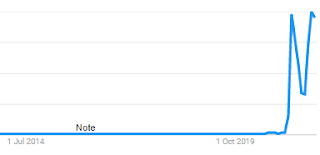
The data from 2004 to 2014 is excluded since it is a flat zero line. The trend line since then would seem to suggest that the wider demand for "twitch emotes" has passed. Combining the rising and top keyword queries from Trends, sample keyword phrases include:

  • twitch emotes maker
  • top twitch emotes
  • how to make twitch emotes
  • free twitch emotes
  • how to get twitch emotes


social media management trends 2009 to 2021
Social Media Management

From the above graph, social media management would appear to be a trending topic in Trends that is also trending organically in search engines at large. By way of example, here are the top 5 rising keyword queries related to social media management:

  • best social media management companies
  • social media management price
  • personal social media management
  • social media management for small business
  • best free social media management tools
The sentiment that this is a rising trend is backed up by the fact that there are plenty of related keyword phrases (25/25 in Trends Top Queries and 20/25 in Rising Queries). Quite a few of the Breakout rising phrases are geared towards geographic locations, too, which makes for easy reuse, by region, of content created for Fiverr affiliates.

photoshop editing trends 2009 to 2021
Photoshop Editing

The peak organic search volume for photoshop editing appears to have been somewhere in 2017, with quite a big drop-off in 2019 that hasn't really recovered. The top related queries revolve around the following topics:

  • background [hd] images for photoshop editing
  • background images for photoshop editing free download
  • online photoshop editing
  • photoshop editing tutorials
It's also worth noting that there are fewer related keywords reported by Trends (13/25, or 52%) than one might expect for a keyword phrase that has been around since the beginning of Trends records. This also goes some way to supporting the theory that organic searches have stagnated somewhat, and is backed up by the fact that there are also only two rising queries reported by Trends.

voice over trends 2009 to 2021
Voice Over

Not only is the trend line for voice over flat, it is also hovering around 25% of its peak, which occurred in mid-2004. The top related query is for voice over jobs, and there is some confusion in the results between voice over as a technology (voice over IP) or as a service (voicing over video). Here are the top 5:

  • voice over jobs
  • voice over ip
  • voice over video
  • voice over iphone
  • voice over artist
An educated guess would be that Fiverr affiliates are more in the voice over as a service category, rather than technology. For the curious, there's also a distinction between "voice over" and "voiceover":


voice over vs voiceover trends
"Voice Over" vs "Voiceover"

The other obvious query - "voice-over" - was even less popular than the red-labelled "voiceover". There might be some space to help out Fiverr affiliates in this topic, but be prepared to weed out a lot of tech-related red herrings.


content writer trends
Content Writer

Another topic that is on the ascendency across search engines, and not just on Fiverr, content writer has a number of very interesting rising queries revealed by Trends:

  • content writer near me
  • arabic content writer
  • content writer wanted
  • saas content writer
  • web content writer

All of the above, with the exception of "web content writer" are also Breakout queries, meaning that the comparable volume is so far beyond the others as to be considered trending very highly. However, the trend lines for these indicate that the market may be smaller than the overall trendline suggests. Here are the top 5 related queries (based on the last 12 months) for comparison:

  • content writer job[s]
  • freelance content writer
  • content writer salary
  • what is content writer
  • website content writer

There are some solid possibilities, but the overall sentiment is that it will be pretty competitive for both the Fiverr affiliates selling into the market and any content strategists vying to help them.


nft trends
NFT

Quite what people expect to find on Fiverr when they search for "NFT" isn't clear. It feels unlikely that $5 will buy you something that you can turn into an NFT that can be exchanged for *gulp* millions, but reading articles such as this one from CNBC about a boy who made a small fortune from Weird Whales proves that anything is possible.

From the chart, the newness of NFT as a search term is obvious. However, it also has 25/25 rising queries in Trends, and 25/25 top queries, which hints that it may be more than a flash in the pan. Here's the top 5 rising queries that mention "NFT":

  • opensea nft
  • nft games
  • nft art finance
  • what is a nft
  • how to buy nft

There are plenty more, and they are all Breakout. If you are a techie, who knows about NFTs, and you can find an angle on Fiverr, this is the one that I'd be pushing: offering content to affiliates providing NFT services.

I'll see you there, selling pickaxes and not gold.

Summary

The above is a very brief skim across the top, as a demonstration of how you should treat strategic keyword research when considering either helping existing freelancers on a platform like Fiverr. Remember that it's far easier to sell shovels, picks, and denim workwear than it is to mine a diamond or chunk of gold.

Please reach out in the comments below to discuss any of the above, or request a one-on-one session to explore keyword research and content strategies for your own projects.

Sources & Resources


Tuesday, 28 August 2018

Why Every Site Needs a Search Engine

This article gives you two ways you can implement site-specific searches on your web page. Think of it as like having your own site-wide search engine. The question is: why should you do it?

It's simple, really: keywords used by your target market are part of your marketing resources. They help in market research, market development, and outreach marketing.

Search terms used by your visitors tell you what they want to see on your site. They also tell you how you should be marketing your site, what content you you should be producing, and how items should be listed for sale.

However, it can be tricky to make the most of this valuable information, and capturing it through various plug-ins is not always straightforward, or cheap.

Both these techniques are highly transparent, and free to use; my advice is to start using on-site search to monitor your existing market and build out your strategic keyword management process using the data that you gather as a result.

The Simple Search Solution

Use Google site search.

The background to this approach is represented by the following Google query:

  • site:searchengineland.com keyword research

This simple instruction tells Google to only return results for the site mentioned. This is convenient for site owners who want to check their coverage of keyword terms, but also very convenient if you want to provide a site specific search function.

The only caveat is that the pages must be indexed by Google.

Drop-In Javascript

There are two parts to the solution:

  • The HTML for the search form;
  • The Javascript to open the search.

Refinements on the following drop-in HTML and Javascript are many and various:

  • open the search in a new window;
  • open the search in an inline frame;
  • use various search modifiers to steer the result;
  • etc.
The one major advantage is that you'll see, in your web traffic statistics, the search terms being used to query Google. This means that you can check that people are coming to your site for the right reasons, and, crucially, check that you're still serving them to the best of your ability.

Here's the basic HTML:

<input id="search query" type="text" />
<button 
onClick="window.location.href=submitSearch(document.getElementById('search_query').value);">
Search</button>

All that this does is call the Javascript function submitSearch (defined below) with the contents of the text input (that's what all that getElementById code does), and then set the URL of the current page to the result of the submitSearch function.

Here's the Javascript (stick it at the top of the page, in the head section):

<script type="text/javascript">
function submitSearch(search_query) {
  search_domain = encodeURIComponent('site:your-domain.com');
  search_text = '+"' + search_query.replace(" ", "+") + '"';
  return search_domain + search_text;
}
</script>

This snippet forms the query out of the site and the query text, making sure that it is safe for use in a URL. Important: you should replace your-domain.com with your own domain.

The result is a Google search page, containing results for the keywords typed in by the visitor, restricted to pages from your site. In your logging, you will then see an Exit with the URL, inclduign the keywords.

Note that this doesn't work for sub-domains terribly well; so, for it to work, you will need to buy your own domain name, even if you only use it to point to Blogger!

More Advanced Options

Create a Google Custom Search engine, and add it to your site.

There are a few pre-requisites:

  • Your site is registered in Search Console;
  • You have Google Analytics set up.

The process is relatively painless, if a little technical. However, as always, the Google help on the topic is pretty good, and as long as you can edit your web site HTML, it should be fairly straightforward.

A big plus for bloggers, especially, is that it can be monetised via AdSense, too.

Tip: You get a bit more power, and advanced analytics (thanks to integration with Google Analytics and Search Console) including the ability to use sub-domains.

So, What Now?

The worst thing you can do is nothing.

At a minimum you need to give your site users a decent way to search your content for something that is meaningful to them. The next worst thing would be not to track the things they look for.

Google has tried to make this a bit more opaque, in the name of privacy. They hide the content of query strings made by users who are logged into their Google account, for example. However, you should attempt to get as much search data from your own site as possible.

Why?

The reasoning is simple: if a visitor comes to your site, looking for something specific and can't find it, it's your responsibility to make sure that you supply it.

This is how market research operates. Strategic keyword management - treating your pool of available SEO friendly keyword phrases as a valuable business resource - relies on market research.

Without it, you're just throwing spaghetti at the wall, hoping that some of it sticks.

Friday, 9 June 2017

Keyword Research, Search Engine Optimization and the Customer Journey

Putting keyword research and SEO at the core of your business strategy can change the way that you align your marketing activities with the customer journey to create new and unique opportunities.

In this article we explore the link between keyword research, SEO and marketing. We will challenge the traditional view of the customer journey which tries to find a market for an existing product, and look at it from the point of view of the customer.

The Customer Journey


The typical customer journey is often viewed as starting out quite passively (Awareness) and ending with the active Advocacy of a product.

However, with the advent of search engines comes an opportunity to turn this Awareness into more active participation.

Rather than creating a product, and then trying to make the market Aware of it, keyword research allows us to approach marketing the other way round.

Given that at any one time, our prospective customers are researching solutions to their problems, it seems only logical to use their own queries to fuel the product development process.

Not only that, but if we are producing me-too products, we can see what kinds of comparison points the market feels are important, which will help to design the solution as well as give us a conversation in which to participate once the product has been created.

In fact, this conversation between the market and the search engines and social media platforms is present at every stage of the customer journey:

  • Awareness: as soon as the market knows that something exists, they start to look for alternatives;
  • Consideration: once the market becomes convinced of the merits of the products on sale, they then start to look for confirmation that there are valid options on the market;
  • Purchase: having made the decision to buy, the market will look for the best option to acquire the product as a function of price, availability, service, etc.;
  • Retention: subsequent conversations between the market and the business will fuel an ongoing process of refinement, and constant attempts to increase the value of the relationship in both directions;
  • Advocacy: customers will generate conversations that can be leveraged as content in their own right (testimonials, for example) or new opportunities to develop the relationship further (products, services, and so forth).
At each of the five stages above, there are opportunities for keyword research and SEO to work together to help propel the business forward.

Keyword Research, SEO & the Customer Journey


Using a niche keyword research service such as those offered by The Keyword Coach enables you to pick the market's brain and build up a picture of what's important to your future customers. Your basket of keyword phrases is a resource upon which entire businesses can be built.

The Keyword Coach treats keyword research and search engine marketing as strategic resources, rather than merely a part of your online presence. As such, they are constantly evaluated in terms of internal and external context, how they can be deployed (using a Plan-Do-Check-Act cycle), and integrated with the strategy of the organisation.

One example of this is performing Amazon niche site keyword research for product owners (including authors). Amazon is not only a marketplace, but also a search engine, with almost all the features that a traditional search engine has, including auto-suggest.

Coupled with using an indexing engine like Google, it is possible to leverage user generated content as well as marketing content to take advantage of the conversations that are created during the customer journey: from their initial discovery of a product, asking questions about it and eventually leaving reviews.

All of these interactions use key words to describe aspects of the product, both positive and negative, and keeping track of them will help create real opportunities.

In a larger context, the same processes can be used to track customer conversations both on the organisation's site, in social media, and through search engines in order to help make strategic decisions as to what to take to market, where to concentrate efforts and picking the best time to launch.

Friday, 2 June 2017

Why SEO Is Important for Business: Keyword Research, Search Engine Marketing and SEO Principles

To understand why SEO is important for business, we first need to discuss what SEO means.

It has become a buzzword and is often synonymous with "more traffic". However, not all traffic is good traffic.

In the beginning of the world wide web, a search engine was not a sophisticated tool. Subsequently, most search queries were one or two words long, returning a limited set of pages and raw traffic volume was the most important goal.

Playing the numbers game meant that there was an assumed direct correlation between visits and sales.

In those days, SEO meant attracting as many visitors as possible by having high repetition of keyword phrases (otherwise known as keyword stuffing) and many pages that may not even have content relating to what the business was selling (known as spamming the index).

Recent innovations in search engine technology, however, has led to more sophisticated and targeted queries, fewer chances of being able to play the numbers game, and, above all, more opportunities for quality SEO.

Today, SEO has a new meaning.

It's about engagement with search engines, rather than manipulation. It leans heavily on keyword research as part of the marketing strategies of an organisation, and relies on an intimate understanding of the market.

Modern SEO is about quality content meeting the needs of your market, and understanding the intent carried by the words in each query that you choose to target.

It's no longer just a numbers game.

Does SEO Work?


The point of SEO is to get content indexed for keywords that allow you to engage with the customer by proxy, and help them through their journey from discovery to purchase.

If you constantly remind yourself that this is the only reason to conduct SEO, then SEO will work for you and your business.

The moment you turn it into a pure volume game, where you purchase articles from content farms in an attempt to spread your net as wide as possible with no regard for the intent of the fish you might catch, SEO will, at some point, cease to work.

You may well temporarily climb the SERPs (Search Engine Result Pages), and even achieve the number one spot, but it will be both temporary and expensive.

Better to be focused on a narrow, yet responsive slice of the market, and promote content that carries with it the intent to engage with your brand.

Then, SEO will work for you.

How SEO Helps Business


SEO, or search engine marketing (SEM) can help your business in many different ways. However, they're all linked to the strategic marketing plan of the organisation, which can be grouped under three main headings:

  • product development
  • market research
  • sales

Whilst this is a somewhat simplified view, it represents the bare minimum for an organisation's ongoing strategic SEO and keyword research process.

Product development uses a combination of competitor and keyword research, as well as keyword discovery to see what people are looking for: within and outside your target market.

Once a basket of phrases has been isolated, market research can be performed using keyword research techniques to narrow down both the product or service and the route to market.

Finally, with all the research conducted, the market can then be tested as part of the sales process: using SEO to guide prospects through their journey from discovery to purchase.

So, SEO helps business in three main ways:

  • develop new products;
  • explore and develop markets for new and existing products;
  • promote products, services and brand values to the various target markets on their own terms.

This last is something I call participating in your market's conversation, and it's the easiest way to engage and make sales.

Is SEO Worth It?


Like any form of marketing activity, your investment is repaid in an increase in sales; working out if it has been worth the investment will depend on the value of that return.

However, different organisations have different goals and different measurements of their return.

There will be cases where SEO does not translate into measurable direct effect, leaving the return to be evaluated on its own merits such as brand attachment and market education.

There's also the issue of timing.

Many people abandon SEO after just a few iterations, failing to see any direct change in visitor numbers, or conversions. The fact of the matter is that it can take weeks, sometimes months, before any effect, positive or negative is apparent.

Done correctly, SEO will be worth it. But it's not a quick fix, and the effectiveness needs to be measured and evaluated regularly and on its own merits.

Should You Do SEO Yourself?


In a word: absolutely.

You should do as much SEO as you have time for, regardless of whether you have also contracted an SEO professional to do it for you.

However, the caveat is that bad SEO can be as damaging to your business as good SEO can enhance it. So, at the very least doing your own SEO will require a level of self-education.

The best practice is to employ an SEO professional for a year or so, and ask them to help educate you. Then, keep them on a retainer to help out whenever you note that something has happened in the industry that affects the success of your search engine marketing activities.

There are also some activities that are so time-consuming that it is much more productive to outsource them -- integrated keyword research services, for example.

Black Hat SEO vs. White Hat SEO


There's been a lot written about so-called black hat SEO techniques over the years. Much of it has been an attempt to promote valid services, or providing advice on gaming the whole SEO system.

Like anti-virus software, the industry has, at times, felt like an eternal arms race. Search engines change the algorithms to exclude unscrupulous tactics, then black hat SEO specialists try to find a way round them.

Luckily for business owners, who could waste a lot of money trying to keep up, the solution is that search engines are getting smarter.

There's still the possibility that some less ethical techniques will emerge to beat them, but the general thrust of development means that business owners and SEO professionals can rely on solid keyword research, innovative, engaging and high quality content to attract their target market.

Hopefully this article has helped you to work out why SEO is important for business in general, and specifically, how SEO can help your business.

A good start would be to see some real life Keyword Research Examples, or browse the SEO Tutorials.

Monday, 24 April 2017

Basic Keyword Harvesting Techniques to Boost Traffic

Many content managers, bloggers, and internet marketers struggle with SEO and keyword research.

Part of the issue is that they are not using keyword harvesting techniques that actually reflect keywords that are (a) used in the wild, and (b) valuable. The tendency is to brainstorm keywords and then look for those that seem to have high traffic.

This really isn't the best approach.

The best approach to keyword research uses both generating and scraping together. You can harvest keywords from any page, using one of several tools.

Keyword Harvesting

The idea behind harvesting keywords is really very easy: you want to find a way to use content sown by yourself or others into the world wide web to generate root keywords that are both relevant and valuable.

There are two basic parts to the process:

  • Scrape: use a tool to extract keywords from a target web page;
  • Generate: use the root keywords to generate long tail phrases.
The scraping part should use either:
  • Other people's content that comes up in a search for the keyword phrase most closely associated with your niche product or service;
  • Your own content (see the end of this article for an example) created specifically to allow you to harvest phrases related to your niche product or service.

One of the best reasons for using keyword harvesting is that it can be done for free!

Keyword Scraper

There are several tools available to help you scrape keywords from content. The best non-free option is probably something like SEMRush, but there is a Free Generator Tool list here.

However, if you want a tool that is easy to use, complete, free and accurate, then use the AdWords Keyword Planner. The drawback is that you need to do a fair amount of post-processing, but just remember that most of the other tools use the API to this service, so you are essentially using the same information.

(For a lesson on relying too much on third party tools, read "What if all your Keyword Research Tools Disappeared Overnight?".)

The process is easy: just use the "Search for new keywords option", and plug in the URL of the page you want to scrape from in the "Your landing page" box.

Make sure you initially set "Show broadly related ideas" to "No", and set the geographic targeting and language according to your target market. The result is a list that you can export, and then sort according to value. The notion of "value" is a tricky one: for me it's usually a simple multiplication of the volume and expected bid price.

If you want to roll your own selection process, then read "Keyword Selection Strategies for Your Keyword Research and SEO Projects".

The resulting keyword list can then be used to attract visitors to your sales page, site, or blog.

Keyword Generator

Based on content produced by yourself or others, the above process yields a list of root keywords. These can be used as-is but beyond root keywords, many people like to explore content created around long tail keyword phrases.

(For a very thorough exploration of the Long Tail, I suggest reading Chris Anderson's Longer Long Tail book.)

Essentially, long tail phrases combine several words together to represent a narrow niche, and allow you to benefit from the root keyword visibility, combined with the qualifiers that make the phrase unique and targeted.

The combination is usually a much better placement in the SERPs than the root by itself, and by judiciously planning a content web around several related long tail keyword phrases, you can usually corner a bigger segment of the market than if you tried to compete head on with everyone else.

To do this, I tend to use a scraper like KeywordTool.io which scrapes auto-suggest queries from Google, YouTube, Bing, and Amazon. Starting with the root phrase, make sure you set the correct geo-targeting and linguistic attributes, and then let the tool do the rest.

Once you have the list, you can export it and then import it into the Google AdWords Keyword Tool, and analyse it in the usual way.

Conclusion: Step by Step Harvesting Process

So, here's a process that will yield a steady stream of keywords for you to harvest, but be warned: it actually takes some effort.

  1. Set up a page that will contain an ever-expanding glossary of terms related to your product or service (could also be an FAQ), for example: Robotic Lawn Mower Brands and Models Guide;
  2. Allow page/blog comments, but set them to be moderated (encourage feedback; valuable source of keywords);
  3. Each day/week/month (pick the frequency that works for you), use the Google AdWords Keyword Planner as a keyword scraper to harvest the best (i.e. most valuable) keywords for your niche;
  4. Add any new ones on a Broad Match that are relevant to your master keyword list;
  5. Use a generator like KeywordTools.io to generate long tail keyword lists to work into blog content, and feed them back into the system as glossary/FAQ items, or make another page to sow new ideas and harvest the most current keywords from.
Regularly applying the above keyword harvesting process will serve as a way to take the pulse of your target market, as well as provide a rich stream of long tail keyword phrases with which to populate your content.

Really useful inspiration!


Monday, 30 January 2017

Honestly? Jaaxy: Keyword Research Tool Review

Jaaxy is a keyword research tool that follows in a similar tradition to Market Samurai and other tools that try to find keywords that are both relevant and low competition. They have some unique measures, and pride themselves on quick results, but is it as good as the hype would have us believe?

What is Jaaxy?

First and foremost, Jaxxy is part of the Wealthy Affiliate training package and online revenue generation system, and created by the same folks. They developed it to help people get more from their keyword research, and speed up their results.

Think of it this way: the faster Wealthy Affiliate members get money coming in, the more likely they'll subscribe. By having subscriptions in place for all the components of Wealthy Affiliate (including Site Rubix, and various Word Press plug-ins, I suspect), the creators can make a healthy living whilst helping others to do the same.

So, it's laudable, if a little self-serving.

This would all be moot if it didn't work. But here's the rub: Jaaxy is actually quite good.

How to use Jaaxy?

Using the tool is pretty easy for anyone who's being into keyword research for any length of time.

Give it a root keyword, and it will generate a bunch of variations; each of which reflects actual search traffic. So far, so familiar.

The next step, though, is in finding those keywords that stand a chance of making a return.

Since this is something of a holy grail in online business, it's nice to see that Jaaxy goes a bit beyond the usual hit-or-miss approach that other tools have adopted. On the surface, there's nothing really very novel: you get an estimate of the average search volume, then the expected search volume, and an attempt to quantify the number of competing domains.

From these freely available numbers, Jaaxy then returns a value, which is evaluated and encoded as a red, yellow or green dot. Green, in this case, meaning that the keyword phrase has a chance of survival; if you're in any doubt, it also gets a score from 1-100, with 100 being the most likely to rank on the first page of search engine result pages.

Subscribers also get a peek at the apparent fierceness of competition for domains, too.

For each search, you also get a bunch of related keywords, but without any indication as to why they've been picked. There's also a Brainstorm facility to help you pick even more keywords to test.

And that's the goal: to get you to exhaust the initial 30 free searches as quickly as possible, and convert you into a paid customer.

Nothing wrong with that, but is it worth the upgrade?

Is Jaaxy Accurate?

The first thing that a tool needs to be is accurate. It's nothing but a time-saver on the face of it: performing tasks that you could otherwise do yourself, given the right mix of time, patience and keyword research training.

I've compared Jaaxy's recommendations to my own keyword research (using my own formulae) and they come pretty close. Anyone who has followed my keyword research and SEO training for profitable niches, or who has read my niche profits book will recognise that there is a different skew at the level of choosing the root keywords, but after that results are comparable.

However, that's purely at a red/green level.

The numbers themselves are always questionable. Even my numbers will be: the truth of the matter is that they're only ever going to be accurate within an order of magnitude, and as long as the final analysis is correct it shouldn't matter whether they report a few hundred page hits either way of the "correct" figure.

So, for its own purposes, it is accurate.

Is Jaaxy Good?

For the pure keyword research tools, Jaaxy is no better than Market Samurai, for example.

However, there are some very well thought-out additional tools that make it a whole lot better:

  • Alphabet Soup: Jaaxy's own version of what the free tools AnswerThePublic.com and KeywordTool.io provide;
  • Affiliate Programs: Jaaxy will search out products for you on various platforms, to help profit from your web site;
  • Brainstorm: guided brainstorming with input from major social media sites and online retailers.

Added to the rest of the platform, along with the in-depth training, these tools give affiliate marketers and content marketers the possibility to go beyond just finding keywords, and actually making money.

It's these additional tools that give it the edge for a certain kind of online entrepreneur.

How Much Does Jaaxy Cost?

The basic subscription is $19 per month at the time of writing, with the Pro version coming in at a discounted $49 per month.

There is a free trial, however, which lets you sign up and try out pretty much every feature for 30 searches: however long it takes you to get through them. Given the amount of data available, that might take a while!

So, is Jaaxy any good? Is it worth the subscription fee? The answer is yes, and maybe...

For myself, my own tools and processes identify the same basic basket of keywords, and are a little more in line with my own keyword research philosophy. That philosophy is based on mining for questions; this is an aspect that the Jaaxy programmers might consider adding to the results.

By signing up for a free Jaaxy account, you'll get 30 searches to find out if it's a good fit for you. I'd recommend it for anyone who likes convenience and is willing to trade a one-size-fits-all approach against having all your tools in one convenient place.


Disclaimer: As an affiliate for both Wealthy Affiliate and Jaaxy, if you click any of the above links to those two services, I'll get a small reward. Should you prefer not to reward me for taking the time to use, experiment, and review these products, you can access them on the following two URLs: WealthyAffiliate.com and Jaxxy.com

Monday, 2 January 2017

3 Hot SEO Topics You Missed in 2016!

One of the perennial SEO tasks that hits in January is the usual debate over which of the hundreds of search signals you should pay attention to for the coming year.

2016 has been interesting for a lot of reasons, and in search there have been some trends that might have passed you by.

Firstly, though, I'd like to pull out the usual advice that I give clients in January: make a search engine marketing plan. That includes, as always, three things that you didn't do last year, and will do this year, and disposes of three things that didn't work out.

If tyou don't find three things that didn't work out, then either you weren't paying attention, or you haven't been tracking your SEO and SEM activities.

At least that gives you something to put on the 'To Do More Of' list in 2017.

Here's the three things that are most common to my search clients for 2017 and which everyone should continue to do, or start doing in earnest.

Mobile & Local


Right off the bat, making web pages mobile friendly has to be a priority if, like many, you have sidestepped the topic over the past year.

It's more than just moving to a responsive theme on your blog; embracing mobile properly also means:

  • checking the mobile-friendliness of advertising network partners;
  • double-checking plug-in mobile compatibility;
  • creating content with mobile in mind, selectively published for mobile devices.

This last goes hand in hand with local search.

There are a lot of searches that tend to be done on mobile platforms that are also local. The image I like to use is that of a person in the street, using their mobile device to compare prices and make bookings for beauty treatments at neighbouring, competing salons.

It happens. It will happen more frequently in 2017 than 2016, so get used to it.

User First


For 2017, everyone needs to put their users (readers, customers, clients or audience) first in their SEO and SEM activities.

Not the search engines. There are still too many people who look at this as a technology issue, when it isn't any more. The symptom is putting search engines first (i.e. white hat optimisation and near keyword-stuffing) and the cure is user-first SEM.

That means:

  • better content;
  • responding to needs;
  • testing the balance of information-to-sale.

The first one is easy. Have a content plan, based on keyword research, using the full plethora of tools available, and apply it every step of the way. Make it interesting, personal, and relevant.

That means responding to the needs of the audience. If video works best, give them video. If it's how-to PDF files they're after, then create a content plan around that. Check out the questions they are asking, and then give them best-in-class content to answer the questions, and a best-in-class product to go with it.

Of course, that means paying attention to tracking results. It's time to install trackers, pay attention to Search Console and Analytics and make sure you know what works every step of the way, and then replicate it across the content delivery platform.

Keyword Research for RankBrain


Google's gotten smarter in 2016.

The introduction of RankBrain means that your content has multiple meanings to a search engine. The best bit about this is that you don't need to create different pieces of content for different audiences, when they are semantically close in search space.

The slightly troublesome aspect is that you should be a lot more attuned to concepts for your content, and concentrate much less on exact words to represent it.

Yes, you can still use keyword research to uncover your audience's needs, but when it comes to content creation, use the full richness of language to get your ideas across, rather than trying to target a single phrase. It's a tricky balance, but with practice one that is fairly easy to get right.

So, as you go into 2017 with your content marketing plan rolled up under your arm, keyed to topics that you have proven will attract traffic, just remember that it's about the end user, not trying to get free organic traffic at any cost to quality content delivery.

If you want one-on-one help building a search engine marketing plan for 2017, then please use this form to request a free web site evaluation.

Saturday, 10 December 2016

Keyword Research Competitor Analysis Tips and Tricks

In this article we will look at a few tips and tricks related to keyword research competitor analysis.

I'm going to assume that your target page isn't as high up in the SERPs as you would like, and that you have done some basic strategic keyword research to figure out which keyword phrases you should be targeting (depending on whether you have picked a Value or Volume keyword selection strategy.)

The reason the selection strategy matters is because the first technique is entirely keyword driven.

Search Competitor Analysis


Before anything else, you need to know who is in the Top 10 for your target keyword phrase.

The easiest way to do this is to go to your search engine of choice, and type in your search phrase as a query. Here are some important key points:

  • make sure you conduct the search in an "anonymous" browser session (also called InPrivate);
  • set the right geographic context by using the correct location-based engine URL (i.e. .co.uk/.com/.fr etc.);
  • start with a narrow match (i.e. put the keywords "in quotes").

Once you have your list of direct search engine result page competitors, open each target link in a new window, and copy and paste the URL to a notepad or spreadsheet. Do as many as you see fit, across a wide spectrum of URLs (if a lot of them come from so-called "content farms" be wary), but make sure you have at least 10 unique domains / sub-domains.

Keyword Density


Once you've figured out who the competition is, use a tool like SEO Tools Keyword Density Checker to make a list of the one, two and three word keyword phrases, and rank them according to their relative density.

Why does this matter?

Keyword density is one of those measures that used to have recommended hard and fast rules about what the number should be. In the early days, keyword stuffing, a technique that consisted of repeating the target keyword phrase as often as possible in an article got results.

These days, however, search engines "recognise keyword stuffing as a disingenuous tactic" at best (source: Enge et al (2010) The Art of SEO, US:O'Reilly, p. 211) and "can actually get your pages devalued via search engine penalties" at worst (ibid).

Using the tool is easy: just plug in the page that you have identified as being in competition with your own, and then pick out the keywords and their relative densities from the resulting list. Now you know two things:

  • the best keywords;
  • the densities that are currently working.

Of course, the more pages you analyse, the better your keyword density research will be, and since the results are always relative to your own performance, you should also conduct the same exercise on one of your own pages.

Strategic Keyword Competitor Analysis


Another tactic you can use to expose keyword phrases that your competitors are targeting is to copy and paste the URL into the AdWords Keyword Planner tool.

In the same way that the SEO Tools utility above picks out keyword phrases, the Keyword Planner will analyse the content of the page, and pick up keywords from the Google and AdWords' keyword databases.

The result is a list that can be used to create content to rival that which is being put out by the competition, lifted from their own text. Incidentally, the technique can also be used as a cross check for your own content (to make sure Google is picking up the right keyword phrases) or s a way to pick out keywords to target with an AdWords campaign.

The Keyword Coach Keyword Research Tutorials are a good place to start if you need some tips on how to analyse the resulting lists of keyword and search data, or just search the blog for "long tail keywords".

Processing lists of keywords to find those that match your strategy is a useful skill to learn, and the Keyword Planner results are a great (free) data source to start with.

Finally, the SEMRush tool is great for giving you an overview of your competition, and the keywords that they are targeting. What's great is that it works well for sub-domains as well as domains. However the tool performs but less well for pages on a domain.

Maintaining a list of keywords that are preferred by the competition is a good way to add keyword research and keyword marketing to your ongoing competitive advantage, just assign some time in your keyword research strategy and process to apply these techniques and stay ahead of the pack!

Friday, 9 December 2016

Keyword Selection Strategies for Your Keyword Research & SEO Projects

One of the questions that comes up from people following the free Keyword Research & SEO Tutorials is "How do I implement a keyword selection strategy?"

This article comprises top tips from the Niche Blogger Content Blueprint book, with a slight twist to help you apply the theory regardless of whether you're:
Strategy: Keyword Selection

  • a product creator
  • an author
  • a store owner
  • blogger, niche marketer or affiliate...

These are tips for everyone, whether they have an offline or online business; or are playing the hybrid game -- taking offline online and vice versa.

The Volume Strategy


This is, on the face of it, and easy one.

If you are looking for volume, then just pick the keyword phrase with the most searches (on average) per month, right?

Wrong. Or, at least, half wrong...

For a start, keywords are seasonal, and so your target keyword selection needs to be seasonal, too.

(You can download monthly keyword statistics right from within Keyword Planner.)

Then, keyword search volumes differ by geographic location; remembering that you have two geographies to take account of -- your own, and your market's -- and so, keywords have to be selected from a pool that makes geographic, as well as seasonal sense.

Get these two right, though, and you'll be making the best start.

But what if volume isn't your only priority?

The Value Strategy


There are two values in this strategy, both linked to the Suggested Bid calculated by the Keyword Planner.

The Low Value strategy places the emphasis on the cost of advertising to a group, whereas the High Value strategy looks at a niche that has a relatively high advertising spend as one that offers potential riches.

If you are an advertiser, the balance is towards a wide reach (Volume) and low cost (Suggested Bid, or Cost-per-Click). This is the Low Value strategy, which is a bit of a misnomer, because if you get it right, it can bring in a great ROI.

The trick is to make sure that you do the keyword research properly to identify a high-converting phrase (not just a high click-rate, but a high conversion rate once the visitor hits your page)  with a relatively low CPC.

The other side of the coin is to look for niches with a very high value (Search Volume x Suggested Bid) and make that the basis of your keyword selection. However, I would caution against using these keyword phrases in an AdWords campaign because, unless  you have a very high conversion rate and margin, it can become an expensive project!

The Competition Strategy


Anyone who has hired an SEO specialist has probably heard the term "KEI" (Keyword Effectiveness Index) which is a weighted calculation that tries to take account of the fact that not many people read past the first 10 results of a search, and of those that do, the click rate tails off noticeably...

(If you want proof of this, just look at your GWT / Search Console data, and order it by SERPs, and watch the click-through-rate plummet! To take advantage of this "lost traffic", check out my Zero Traffic Keyword Research post.)

The theory behind the KEI is that the more competition you have, the less attractive a keyword.

Up to a point, I agree.

However, as keywords become more and more long-tail in nature, this may well change, and a more modern index might be in order.

For a start, if you are going to try and evaluate the competition, use an appropriate search context:

  • the correct search domain (i.e. google.co.uk/.com/.fr etc...);
  • keywords "in quotes" (narrow match);
  • PTB (phrase-to-broad) ratio, where available.

The first two are pretty obvious, but the last one is a specific ratio that some of the bigger automated tools provide and which is tough to calculate on your own. Your best bet, if you're doing the job manually, is to construct a query:

  • using the allintitle: option (Google-specific, sorry!)
  • break the phrase into "quoted" "sections" that represent the "long-tail"

If you apply these two in conjunction with the correct context, then the estimated number of pages returned by Google should fairly represent the competition.

Just remember that the value is relative and so the absolute number is irrelevant. My advice would be to put the results on a logarithmic scale, and use that as the basis for your keyword selection process.

Your Keyword Selection Strategy


Of course, you can use these principles to roll your own keyword selection strategy; we do that every time a client buys one of our keyword research services.

It's an easy thing to do using a spreadsheet. For example, if you have the search volume in Column 'B', and the CPC (suggested bid) in Column 'C', then a value-weighted strategy might use a formula such as:

  • =B * (C^2)

On the other hand, if you want to skew by volume:
  • = (B^2) * C
Other factors, such as the Competition Index (KEI or equivalent -- free download from Launch2Success here) can be built into the formula, too, so that you get the best keyword selection strategy for your own specific use.

To see the keyword selection process in action, check out the Niche Blogger Content Blueprint or one of our free tutorials (links at the top of the page.)

Thursday, 8 December 2016

Keyword Research for Hotel SEO Strategy

With direct bookings both more profitable and becoming more frequent, it pays to have a keyword research and SEO strategy specifically tailored to the hospitality industry. There are two drivers for this:

  • Search engines become smarter and attuned to local search;
  • Consumers becoming more comfortable booking online.

While sites like TripAdvisor and Expedia are also key to a hotel's success and cannot be ignored, more and more consumers are turning to Google first to find their perfect getaway location.

Along with some excellent advice in the Hospitality Net article "How to Jumpstart Your Hotel's Direct Bookings Through Search Engine Marketing" there are some surprising figures to back this up. According to the article 61% of potential customers come through a search engine with a 20% year on year increase in relevant searches performed on Google.

This would indicate that SEO is going to be a deciding factor in a hotel's long-term direct booking success.

Hotel SEO Strategy 


While it is entirely possible to reduce the SEO process through concentrating on "7 Steps for Your Small Business Survival" (NuWireInvestor web site) including local search, social engagement and creating attractive, valuable content, many experts seem to gloss over the keyword research strategy as part of the marketing process.

Search engine optimisation (SEO) and search engine marketing (SEM) both rely heavily on an integrated keyword management strategy, and so it is surprising that it doesn't seem to get the emphasis that it richly deserves.

For example: while a long tail keyword research policy can help identify a good starting point for SEO and SEM activities, unless it becomes part of a test, measure and adjust cycle the research will always be second hand.

Keywords are the communication conduit between your target market and your hospitality offering, so properly researching them ought to be a priority: and conducted by a keyword research specialist rather than consigned to being merely part of the SEO/SEM process.

Keyword Research for Hotels


For those who have the time and confidence to go it alone, here are a few salient tips from the trenches of keyword research strategy.

Firstly, local search is highly important. Search engines can not only deal with hyper specific local searches (such as "hotel near <landmark> in <city>") but also there is a rise of the "near me" syndrome: as in "hotel near me".

However, this last is also very location-specific, so the key takeaway here has to be to remember to use geographic targeting when researching keyword usage using a tool such as the Keyword Planner.

There is a big difference between a search conducted locally ("hotel near me") and a search conducted for a location ("hotel near new york grand central station"), and this difference needs to be reflected in the SEO/SEM strategy and in the keyword research.

Next, review local restaurants, landmarks, museums, events and places of local interest in order to generate useful, valuable, attractive content, but make sure you concentrate on those that qualify in one of two ways:

  • high search volume
  • long-tail low-traffic low-competition

The first is obvious; it takes very little effort to create a piece of content highly optimised towards a very popular attraction, and if it has a very high number of requests you may find yourself with a (small) piece of a large traffic pie.

The second might not be so obvious. However, if your hotel is the only one where a visitor from out of town can get a great idea of what the event (restaurant, attraction, landmark, etc.) has to offer, then you will naturally score highly and attract high conversion rates.

Finally, remember to go for social sharing and engagement with other local businesses. For example, consider writing a piece that is highly optimised towards your chosen long tail keywords (i.e. "hotel near conference center in miami with sauna" -- I made that up, by the way!) and encouraging other local businesses to publish it, and link out to your site from theirs.

At the same time, use social keyword research to find out what conversations people are having about hotels and facilities in your area, and then jump in on the conversations with opinion (and links to your hotel booking facility) as well as using that keyword research to fuel content creation.

All of this takes time, granted, but is worth the extra effort. While The Keyword Coach has some very reasonable plans (you can take us for a test drive for $5!), there's no reason why computer literate, internet savvy hoteliers with time on their hands can't use the information in our keyword research and SEO tutorials to make a start on their own.

Just remember: Research, Test, Track, Adjust.

Wednesday, 7 December 2016

Keyword Research for Email Marketing


Many businesses find that email marketing remains one of their channels with the highest ROI.

This is mainly due to the fact that they have responsive email lists, built up from customers who have already put their hands up in one of the following ways:
  • downloaded and taken action upon a free report;
  • purchased a relatively cheap item;
  • engaged with the business.

The most responsive of the above are, clearly, existing customers. Indeed, many marketers go one step further and claim that customers' appetite for products will usually exceed your capacity to create new ones.

Subsequently, considering building a list is free, and as long as the list is correctly segmented and the appropriate message sent to each one, the conversion rates can lead to very impressive results.

What is Email Marketing?


Email marketing is often merely described as an email message sent to a prospect with commercial intent.

But that's like saying that marketing is equal to display advertising, which is patently untrue. To get an idea of just how untrue that is, I usually refer clients to Figure 1.1 in "The Marketing Book" by Michael Baker and Susan Hart which depicts the whole of marketing as an iceberg.

Advertising is at the top -- it's the bits you see -- whereas the 90% that you don't see, and which is often neglected, is the true nature of marketing, whose purpose is not only to reach a market and convince them to buy but also to understand that market, related markets, the customer's needs and products that can be presented to them.

So, if you're using email marketing just to send a coupon out (Advertising, Promotion & Public Relations in The Marketing Iceberg) then you're doing it wrong.

Email marketing should also be viewed variously as:

  • a tool for Market Testing;
  • a platform for Product Development;
  • a way to conduct Market & Customer Needs Research.

Each type of list (customer, prospect, etc.) has its use: there is no point, for example, trying to elicit feedback about a commercial product that you know the list recipients could not have bought because they are on a prospects and not a buyers list.

So, where does keyword research come into the equation?

Using Keyword Research for Email Marketing


The first thing to remember is that different list segments will react to different messages.

A buyer probably doesn't need a lot of encouragement to buy again; they just need you to offer them a credible product that is related to something they have already bought. And if you're doing your strategic keyword management properly, you'll already know where their pain/passion points are.

Prospects, on the other hand, need to make that first decision to buy with you: and that's usually a decision that they make with their gut and then justify with logic.

It needs to feel right: so the emotive trigger words come into play.

Not only do you need to participate in a conversation that they are already having outside of your relationship (again, keyword research will throw up these conversations) but you need to push their buttons to drive them to take action.

Of course, you can also use email marketing to elicit reaction (market research), test new product ideas (free downloads in return for market research) and develop a relationship with new markets (referral and affiliate marketing).

However, each interaction needs to come with a healthy dollop of keyword research, as this is the only real way you can be sure that you are communicating with the target market.

Benefits of Keyword Research for Email Marketing


That communication underpins the key benefit: contact.

Every email is contact with the target market, existing market, or to use a more current term, your tribe.

Each time you make contact with your tribe, you build confidence. As confidence in you and your leadership of the tribe grows, so does the trust between you, and your influence within the tribe.

Using keyword research effectively shows that you understand your tribe: you speak to them using words they have either used themselves, or that make perfect sense to them. When combined with well-known trigger words (Richard Bayan's Words that Sell has a good list), your message will become very difficult to refuse.

To get started, check out the Keyword Research Tutorials or take The Keyword Coach for a test drive with one of the low cost keyword research services. Remember: there's gold in those hills, and you can learn how to mine it!